The essentials before you come
- The entrance ticket is bought at the gate. No online ticket for Amboise exists on GetYourGuide; what you book is the guide or a day trip that includes entry. See the bookings page.
- The château’s own guided visits are included, daily, about an hour, no supplement and no booking — turn up five minutes before one starts: how they work.
- Allow one to two hours. Amboise is a fragment of the château it once was, and it is genuinely short: see how long to allow.
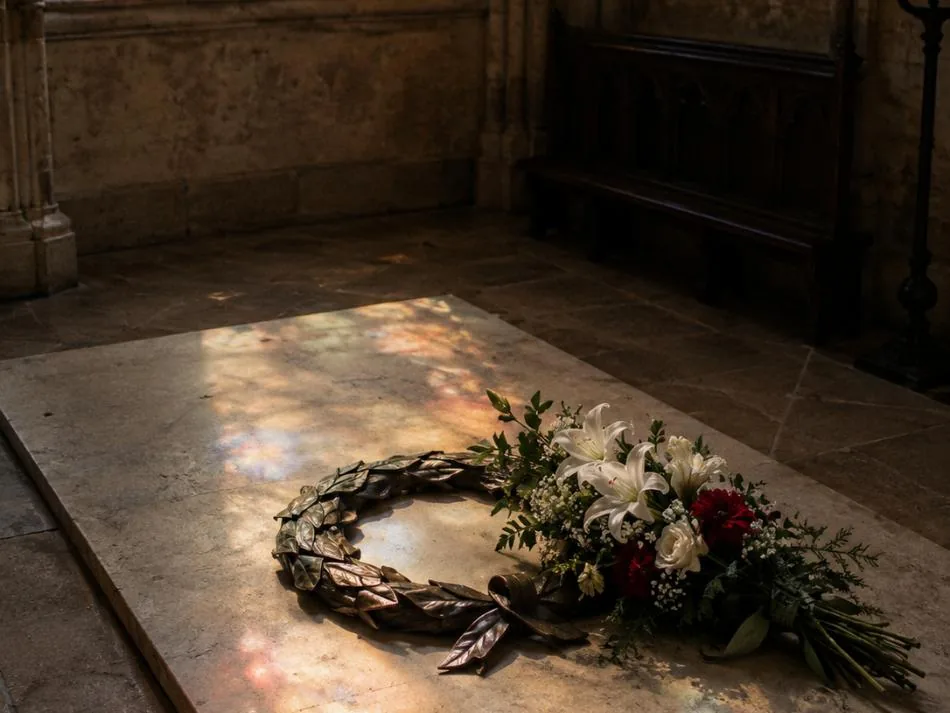
- Leonardo da Vinci’s tomb is in the Saint-Hubert chapel — moved there in 1874, and his by tradition rather than by proof: the honest account.
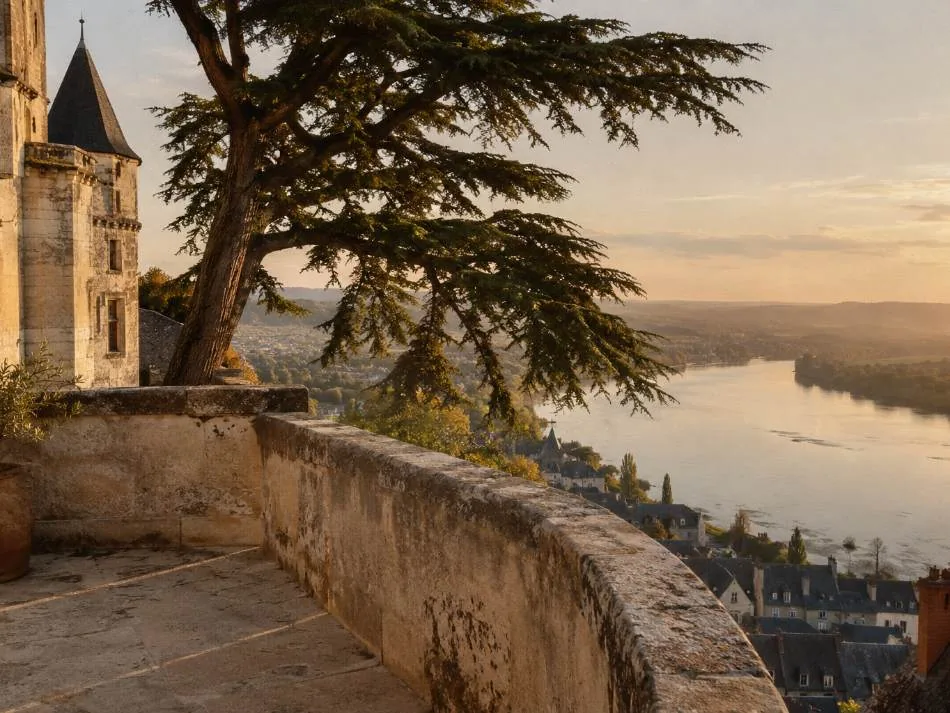
- The terrace is the thing people forget to look at. A turn of the head over a UNESCO landscape and the roofs of the town: the terrace page.
What the Loire castles day trip covers
The flagship booking on this page: the small-group full-day tour from Paris that includes entry to Amboise, Chenonceau and Chambord — the one format that saves you the ticket desk entirely.
What you see
- The Château Royal d’Amboise: the Logis Royal, the Saint-Hubert chapel with Leonardo da Vinci’s tomb, and the terrace over the Loire
- Chenonceau, the château built across the river Cher
- Chambord, and its four hundred-odd rooms
- A guide at each château rather than a single narration on the bus
What it saves you
- Buying three separate entrance tickets on three different desks
- Driving the Loire: the châteaux are far apart and parking is its own afternoon
- Working out the train timetable from Paris and back in one day
- Lunch and a wine tasting, both included in the day
What to know
- It is twelve hours door to door from Paris — a long day by design
- It is in English; for French, see the Amboise guided visit
- If you are already in the Loire, the Tours/Amboise version is shorter
- The Clos Lucé is not included: see the two together
The route, in the order you actually walk it
What you cross on the way up and round, stop by stop — and why the terrace belongs in the middle of the visit rather than at the end.
You come in from the town, below the rock, and climb. The ticket desk is at the foot; from there the route runs up a ramp onto the terrace, and everything worth seeing is arranged along it. It is compact, and that is the point: this is a one-hour château that people give twenty minutes.
- The ramp up from the town — A climb from the ticket desk onto the rock. Why it matters: it is the only part that gives you the scale of the fortress underneath the palace, and the last easy place to check what time the next included guided visit leaves.
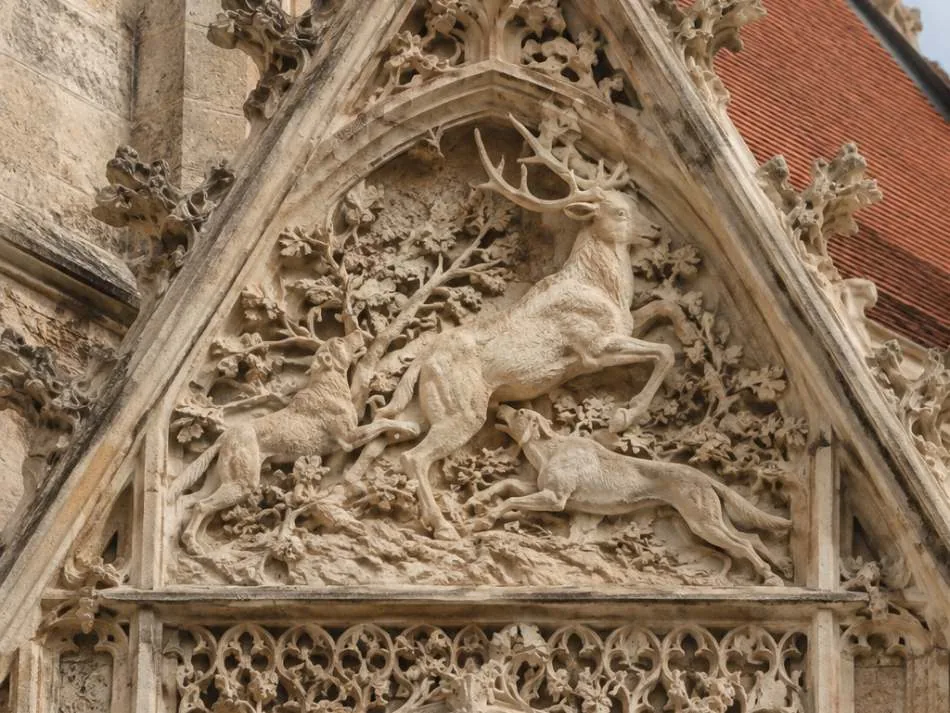
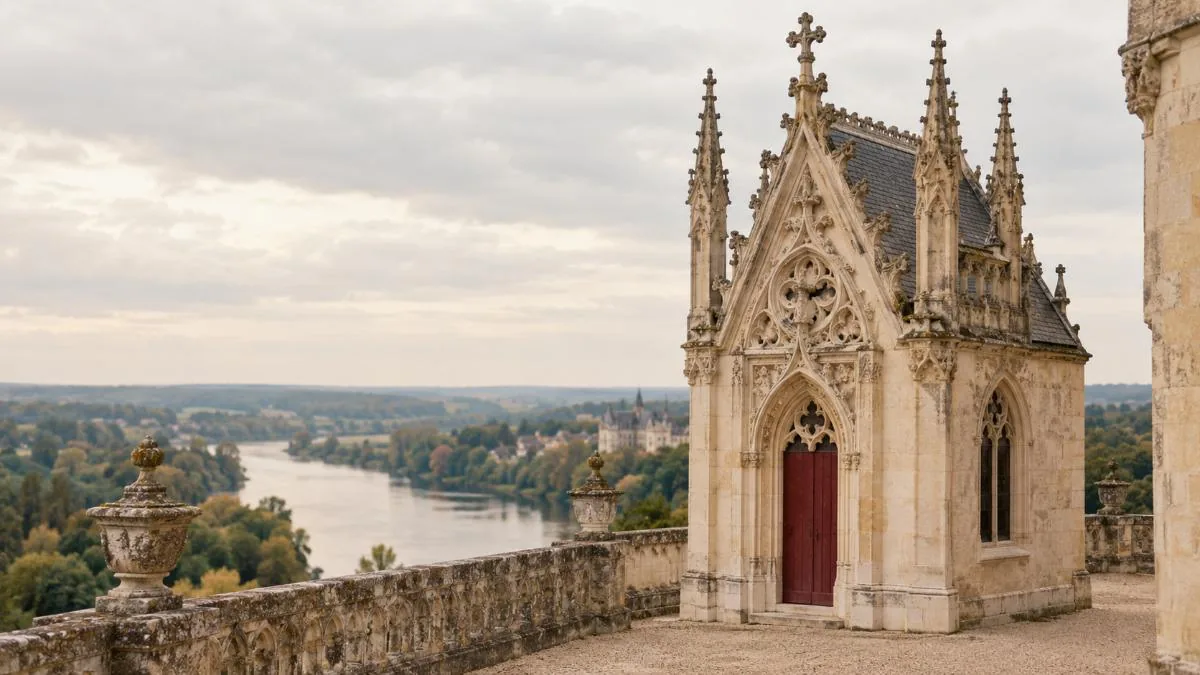
- The Saint-Hubert chapel — Small, flamboyant Gothic, late fifteenth century, with a carved lintel of the hunt of Saint Hubert over the door. Why it matters: Leonardo da Vinci’s tomb is inside, and the chapel takes four minutes, so people walk past it looking for something grander.
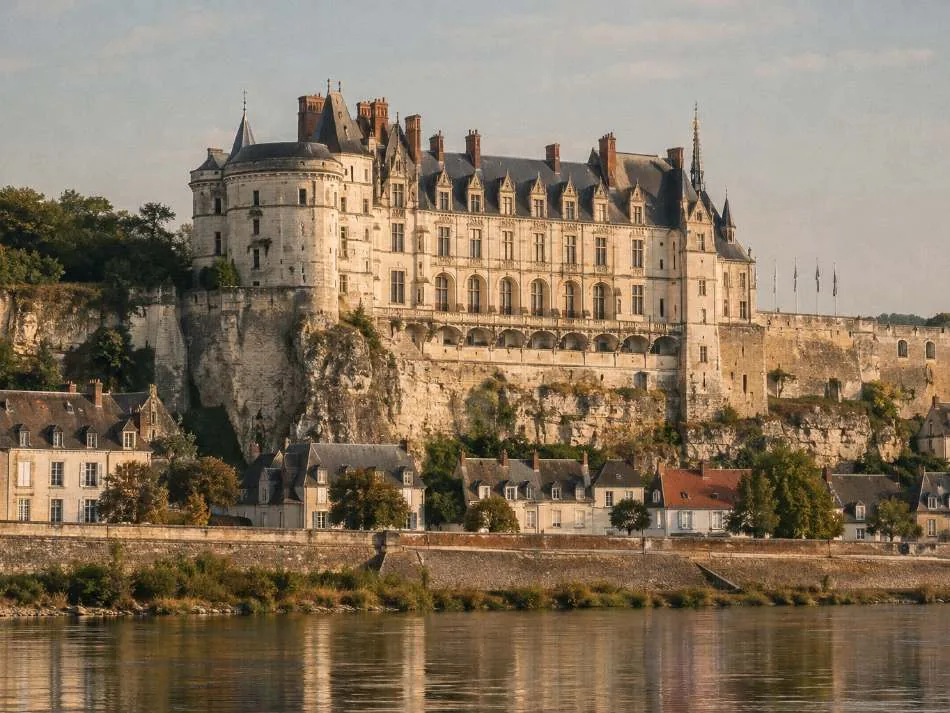
- The Logis Royal — The royal lodging along the terrace: Gothic at one end, Renaissance at the other, because it was built across the moment France changed its mind about architecture. Why it matters: this is the château — the rest was demolished.
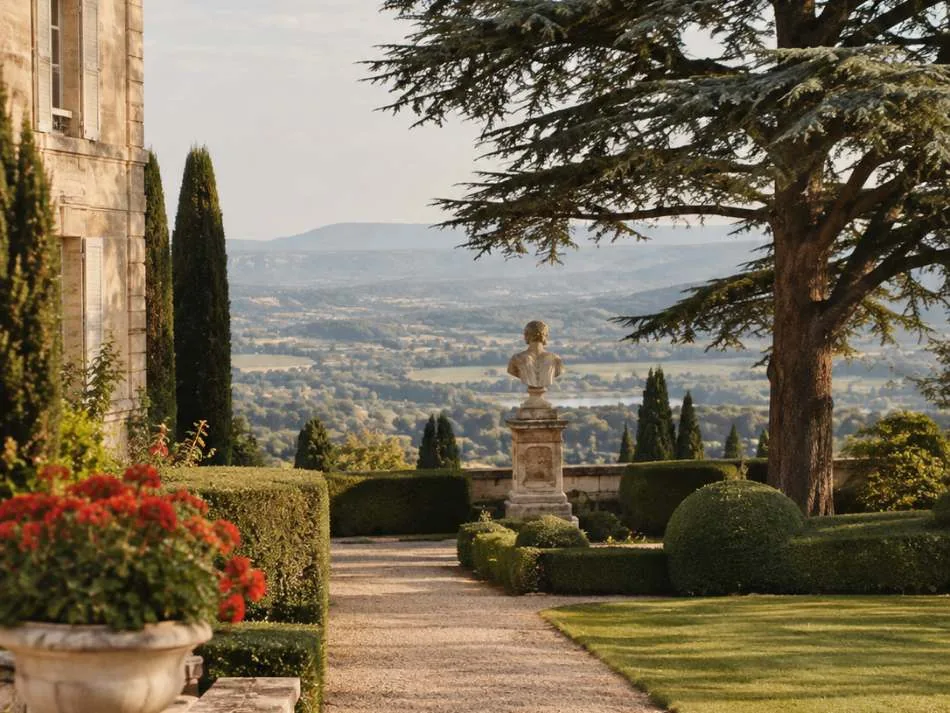
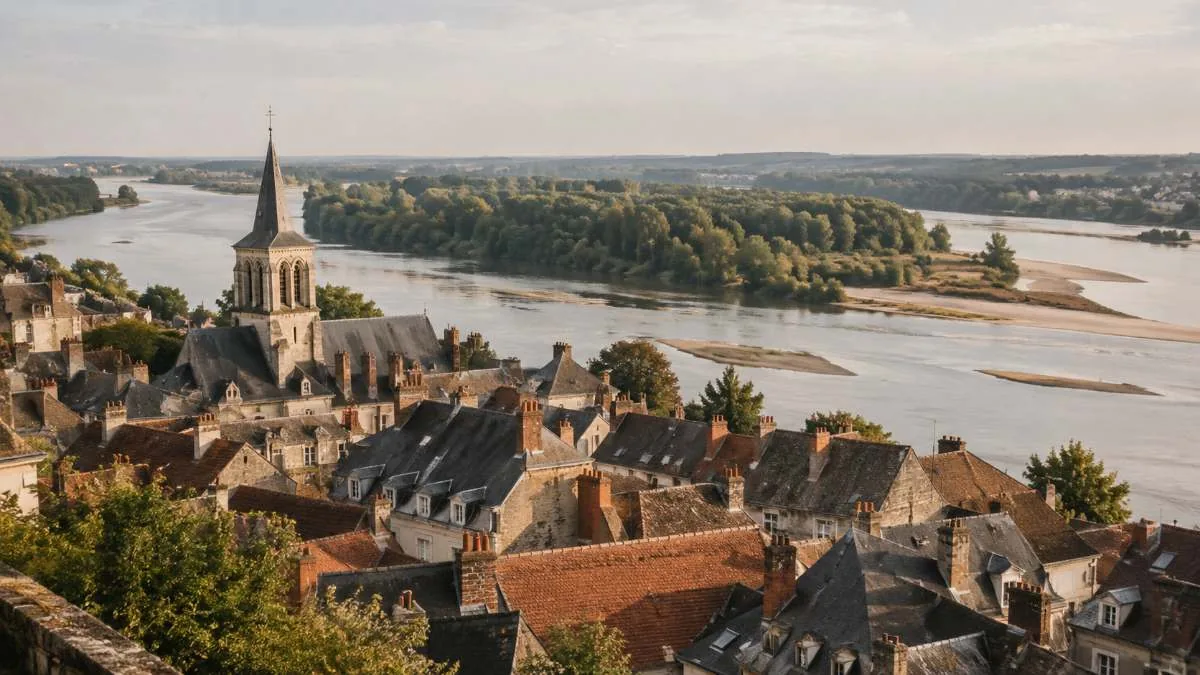
- The terrace and the view — Out into the open, above the Loire. Why it matters: it is the best thing here and it is free of any queue, any ticket check and any hurry. Stay longer than you think.
- The gardens — Where the demolished wings used to stand, now lawns, cedars and the graves of companions of the Emir Abd el-Kader, held at Amboise from 1848. Why it matters: it is the quietest corner and almost nobody reads the stones.
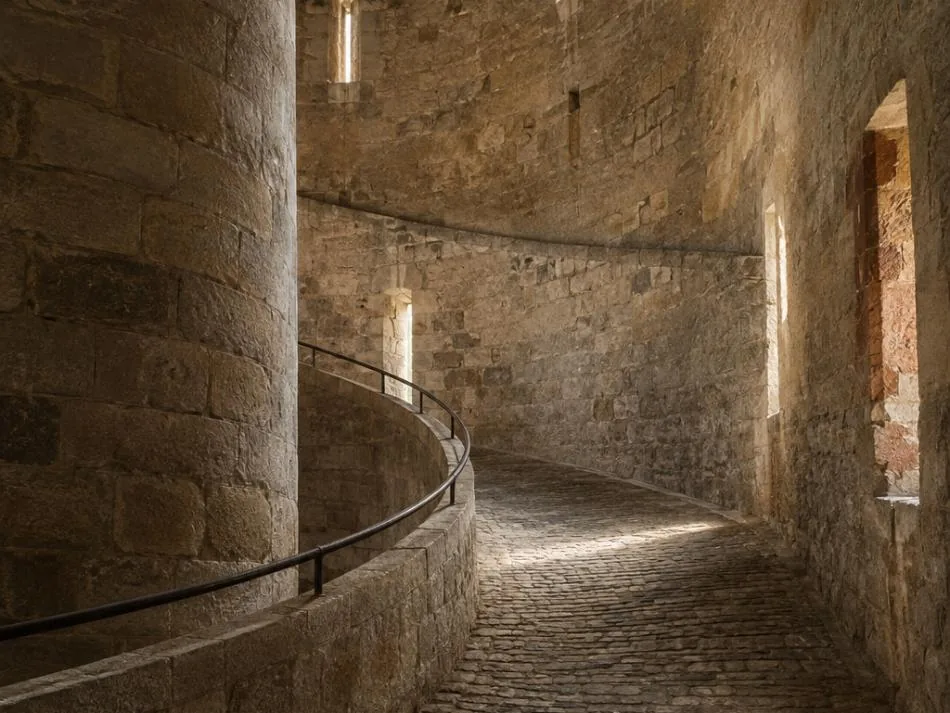
- The Tour des Minimes — A spiral ramp inside a tower, wide enough to ride a horse up. Why it matters: it is the piece of engineering that impresses people most, and it is on the way out.
With an hour, do the chapel, the Logis Royal and the terrace. With two, add the gardens and the ramp tower and take the included guided visit. The full breakdown is on the what-to-see page.
Booking, in four steps
Decide whether you are booking the château or the day
For Amboise alone you buy at the gate and optionally add a guide. For a day that includes Amboise, Chenonceau and Chambord with entry, you book the trip. Both are laid out on the bookings page.
Check the day
The château closes on 1 January and 25 December, winter hours are much shorter than summer ones, and rampart works have affected parts of the site since 2025: see opening hours and the rampart works.
Book the guiding, not the entry
Guided visits and day trips are booked on GetYourGuide; the château’s own included visits are not booked at all. What needs booking and what does not is on the booking page.
Plan the afternoon
Amboise is short. Pair it with the Clos Lucé five hundred metres away, or with a second château: see the two together and which châteaux to pick.
The Loire castles day trip, date by date
Live availability for the small-group full-day tour from Paris that includes entry to Amboise, Chenonceau and Chambord, with a guide at each and lunch on the way. If you are already in Amboise, you want the guiding instead — see the comparison below.
Day trip, guided visit, or private tour?
Three different situations, not three versions of the same thing. The day trip is for people coming from Paris with no car. The guided visit is for people already in Amboise who want the story. The private tour is the only one that bundles the château entrance ticket for you.
| Our pickFrom Paris: Small-Group Loire Valley Castles Full-Day Tour | Guided Visit of the Château Royal d’Amboise | Amboise: Private Guided Tour of the Castle with Entry Ticket | |
|---|---|---|---|
| Where it starts | Paris, avenue de Wagram | Outside the château gate | Outside the château gate |
| Duration | 12 hrs door to door | 1 hr 30 | 2 hrs |
| Château entry | Included, for all three châteaux | Not included — buy at the desk | Included |
| Châteaux covered | Amboise, Chenonceau, Chambord | Amboise only | Amboise only |
| Group | Small group | Ten people maximum | Private, your party only |
| Languages | English | French and English | French and English |
| Best for | A Paris base and no car | Already in town, want the story | Families and anyone wanting one ticket for everything |
| Book this → | View → | View → |
Photo gallery
Amboise in pictures
The château on its rock, the chapel, Leonardo’s tomb, the terrace over the Loire, the great ramp tower and the gardens, as you meet them along the route.
Six bookings compared
A day trip that includes entry, two ways to add a guide at Amboise, the Clos Lucé next door, a shorter Loire day from Tours, and the e-bike version for people who would rather ride between châteaux. Our detailed reviews are on the reviews page.
 Entry included
From Paris: Small-Group Loire Valley Castles Full-Day Tour
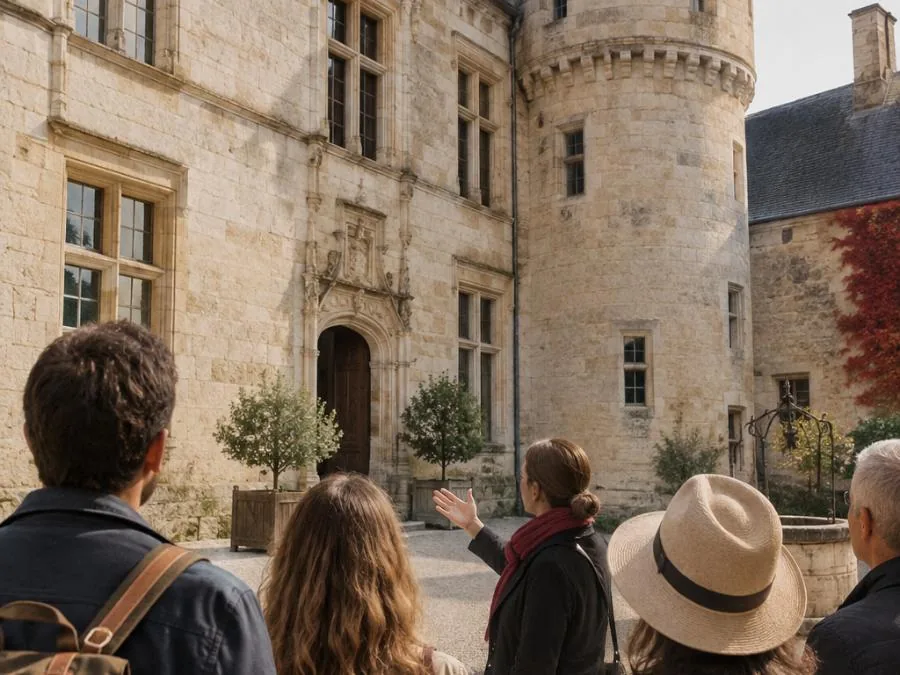 10 people maximum
Guided Visit of the Château Royal d’Amboise
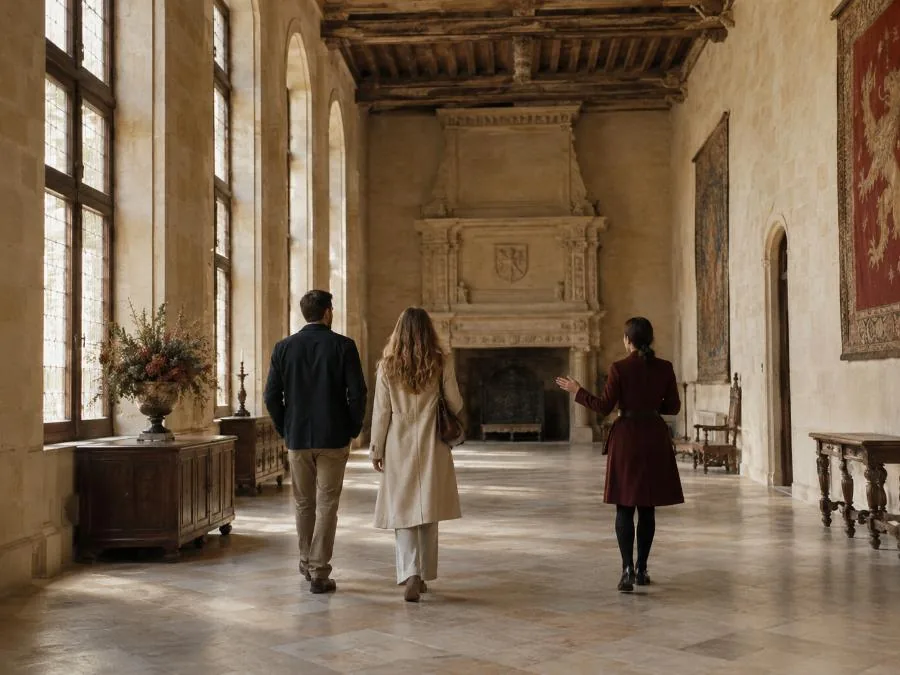 Ticket included
Amboise: Private Guided Tour of the Castle with Entry Ticket
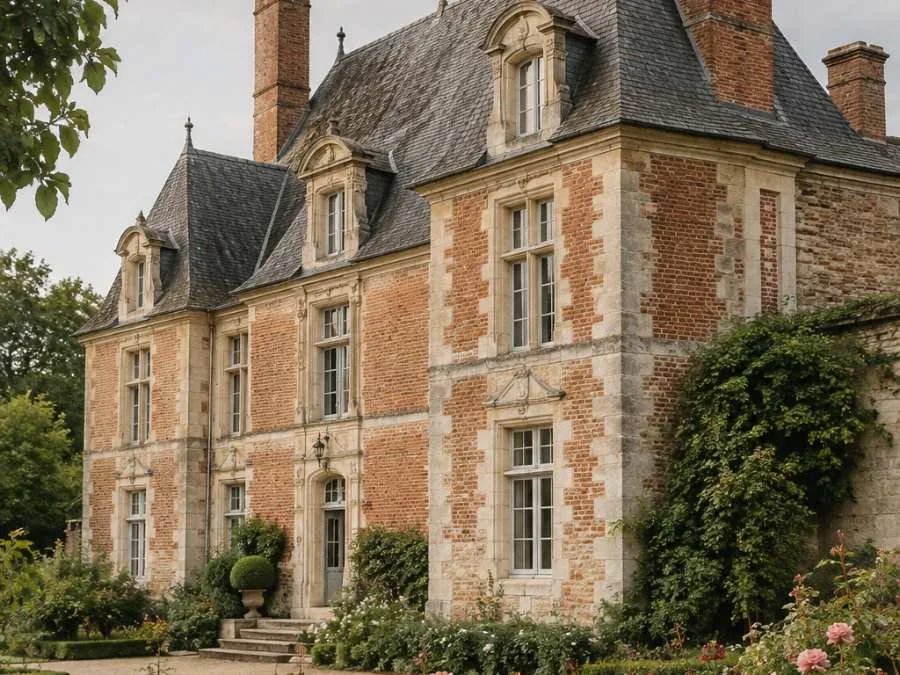 Leonardo’s last home
Guided Visit of the Château du Clos Lucé
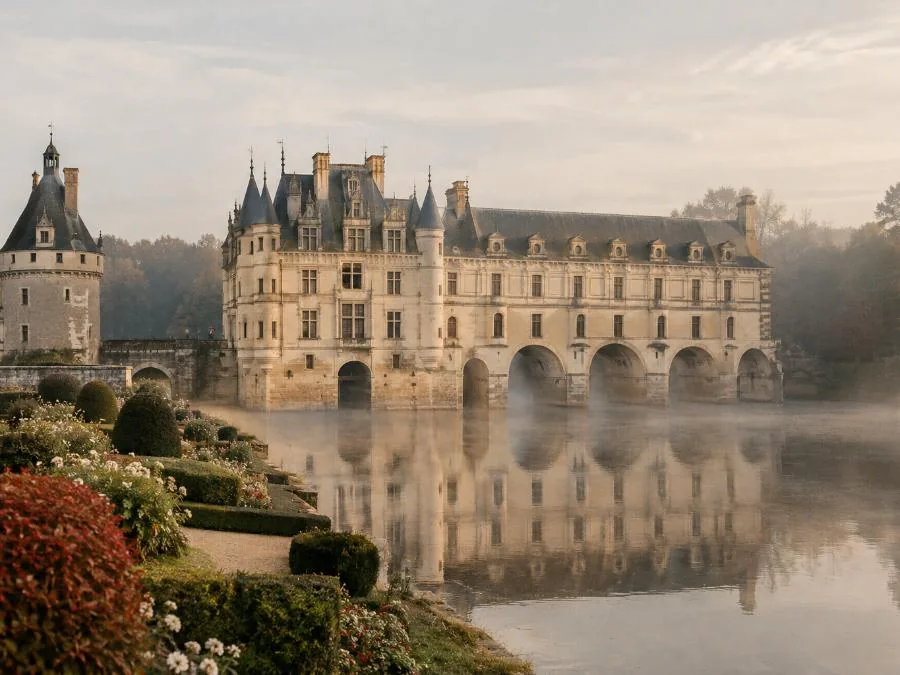 From Tours or Amboise
Chenonceau & Chambord Châteaux Day Trip
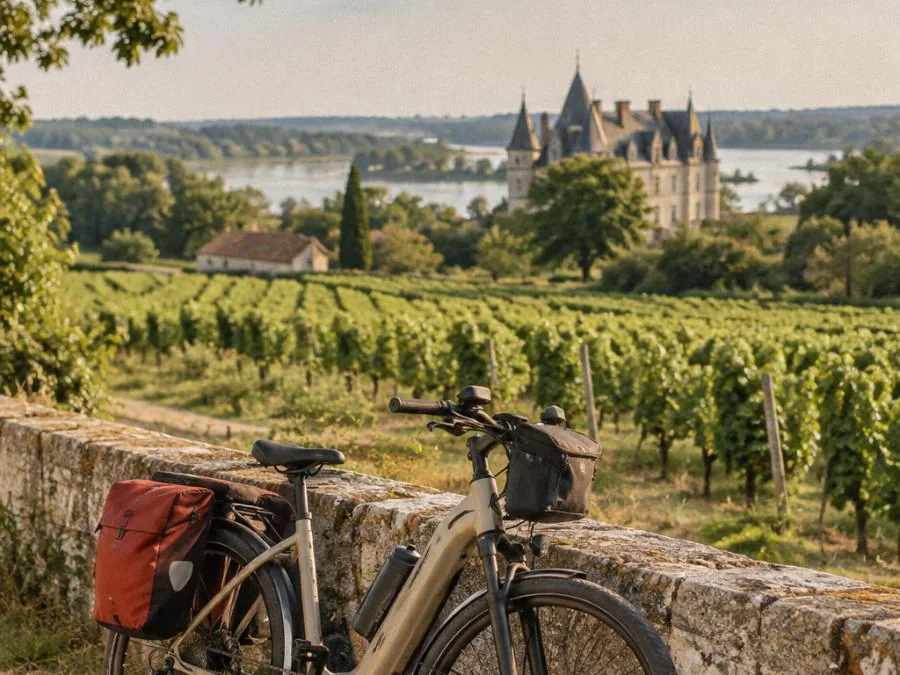 On two wheels
Royal Loire E-bike Day: Amboise, Chenonceau & Wine Tasting
What visitors say
What comes up most often in the GetYourGuide reviews of the products compared here, summarised theme by theme rather than quoted word for word.
The most common surprise is the length: people expect a Chambord-sized visit and find a compact one, and those who knew that in advance report enjoying it far more.
Reviews of the day trips from Paris agree on one thing: having a guide at each château rather than one narration on the bus is what makes the twelve hours work.
Visitors on the small-group guided visits consistently mention the humour and the pace, and that ten people is small enough to ask questions.
A recurring practical note: the guided visits booked on GetYourGuide do not include the château entrance, which has to be bought at the desk beforehand.
People who paired Amboise with the Clos Lucé in the same day describe it as the right shape for a Loire day; people who added a third château describe it as too much.
Almost nobody mentions the château’s own included guided visits, which suggests most visitors never notice they exist.
Ratings and review counts are the live GetYourGuide figures from the operators. Read our full reviews ›
Before you book
The four questions I was asked across the counter most often, with the short answer.
Do you need to book the château in advance?
For the château itself, no — there is no online entrance ticket for Amboise on GetYourGuide and you buy at the desk on arrival. Guided visits and day trips do need booking, because they have fixed departures. The detail is on the booking page.
Is Leonardo da Vinci really buried there?
His tomb is in the Saint-Hubert chapel, and it has been since 1874. Whether the bones are his rests on a nineteenth-century identification that no modern test has confirmed. I set out what is known and what is not on this page.
How long does it take?
An hour for most people; two if you take the included guided visit and spend proper time on the terrace and in the gardens. It is a short château, and knowing that in advance is the difference between a good visit and a puzzled one: how long to allow.
Should you pay for a guide?
Check the board at the entrance first. The château’s own guided visits are included in the ticket, run daily and last about an hour. A paid guide is worth it if you want French or English on demand, a small group, or a fixed time that fits your train — see guided or on your own.
Those dates don’t work?
Browse the other tours and tickets available in Amboise and across the Loire Valley, and pick the day that suits you — instant confirmation.
Amboise, explained
I ran a bookshop on the rue Nationale for thirty years and I live on the rue Victor-Hugo, the lane that runs from the château to the Clos Lucé. Every summer I watch the same thing happen: people arrive expecting Chambord, spend fifty minutes, and leave slightly puzzled that it was over so quickly. Amboise is not a big château. It is a short, strange, very good one, and it rewards you completely differently if you know that before you walk up the ramp.
What you are actually visiting is a fragment
This is the single most useful thing to understand. The Amboise of Charles VIII and François I was several times the size of what stands today: a whole royal town on the rock, wings and galleries and courtyards. In the early nineteenth century most of it was pulled down, and what survived is the piece you now visit — the Logis Royal along the terrace, the Saint-Hubert chapel, the two great ramp towers, and the gardens that sit where the rest used to be. So when the visit feels short, it is not that you missed something. It is that the building itself is missing. The story is on the history page.
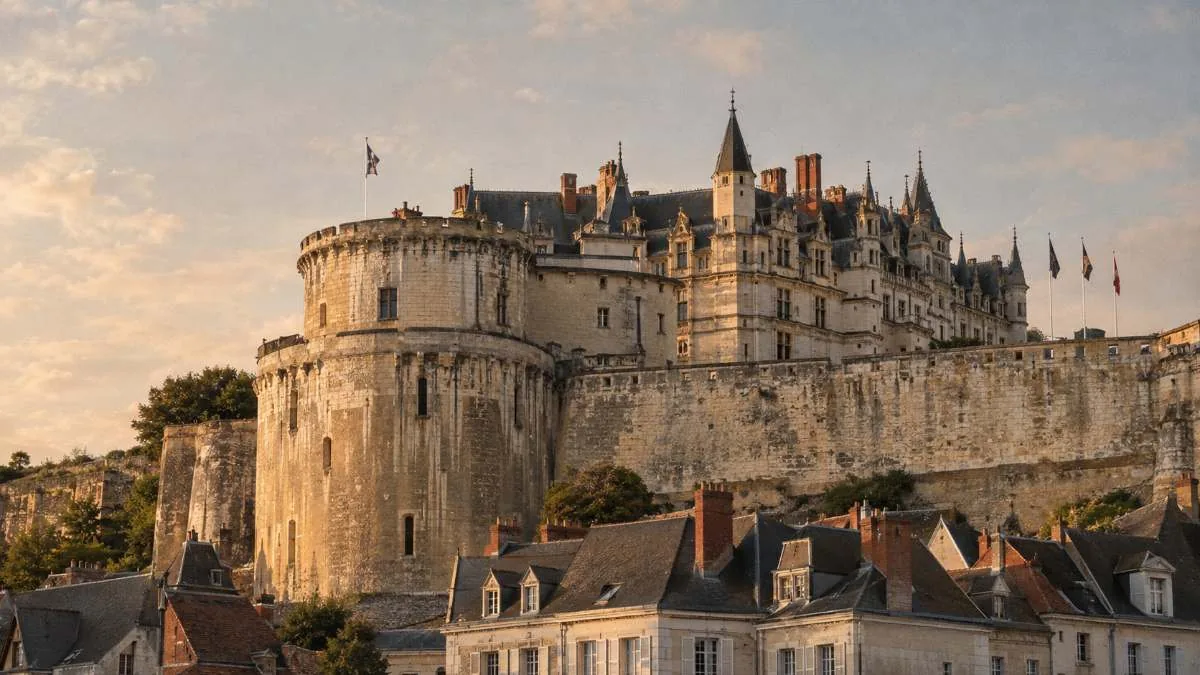
The ticket is bought at the gate
Worth saying plainly, because it surprises people who are used to booking everything in advance: there is no online entrance ticket for the Château Royal d’Amboise on GetYourGuide. You buy at the château’s own desk when you arrive, and in practice there is rarely a queue worth worrying about. What is bookable is the guiding — a small-group or private guide who meets you outside — and the day trips from Paris or Tours that include entry to Amboise along with Chenonceau and Chambord. The whole map is on the bookings page.
And the best guided visit is already included
This is the part almost nobody knows. The château runs its own guided visits, daily, lasting about an hour, included in the entrance ticket — no supplement, no booking, you simply turn up five or ten minutes before one starts. They are good. If you are on the fence about paying for a guide, check the board at the entrance first: you may not need one at all. I give it its own page because it changes what people should buy.
Leonardo is in the chapel — probably
He died at the Clos Lucé on 2 May 1519, five hundred metres up my street, and he asked to be buried in the collegiate church of Saint-Florentin, inside the château walls. That church was destroyed after the Revolution. In 1863 bones were dug from the rubble, identified as his on reasoning that would not survive a modern courtroom, and moved in 1874 into the little Saint-Hubert chapel on the terrace, where the slab you see was recut in 1930. So the honest sentence is: this is Leonardo’s tomb by tradition and by a nineteenth-century act of faith, not by proof. I think that makes it more interesting, not less — the full account is here.
A king killed by a door
Charles VIII was born in this château on 30 June 1470 and died in it on 7 April 1498 — the only king of France both born and dead in a Loire château. He was twenty-seven. On his way through a low passage to watch a game of real tennis in the moat, he struck his head on the lintel, carried on to the game, collapsed some hours later and never recovered. It is the kind of death that sounds invented and is not. See how Charles VIII died and his page.
The terrace is the reason to come
If you take nothing else from this site: walk out onto the terrace and stop. You are standing above the Loire with a clear turn of the head across a landscape that is on the UNESCO World Heritage list, the town roofs directly beneath you, the river running west, and more than ninety species of bird using the rock and the gardens. People photograph the buildings and forget to look outward. Both views are on the terrace page.
The Clos Lucé is a separate visit, and a separate ticket
Five hundred metres along the rue Victor-Hugo stands the manor where Leonardo spent his last three years, brought to France by François I. It is a different property, a different ticket and a different kind of afternoon — the house, the gardens, and full-size machines built from his drawings. Doing both in one day is the classic Amboise plan and it works, but it is a full day, not a morning. The two together explains the timing.
What I would tell someone coming once
Come in the morning. Buy at the gate, ask what time the next included guided visit leaves, and build your hour around it. Do the Logis Royal, then the chapel, then go out and stand on the terrace for longer than feels necessary. Walk down through the Tour des Minimes if it is open — the great spiral ramp built wide enough for horses. Then have lunch in town, and give the afternoon to the Clos Lucé. That is a very good day, and it costs you nothing to plan it right.
Frequently asked questions
Which king died at the Château Royal d’Amboise?
Charles VIII. He was born here on 30 June 1470 and died here on 7 April 1498, aged twenty-seven, after striking his head on a low door lintel on his way to watch a game of real tennis. He is the only king of France both born and dead in a Loire château. See how Charles VIII died.
How long does a visit to the Château Royal d’Amboise take?
About an hour for most visitors, two if you take the château’s own included guided visit and spend time on the terrace and in the gardens. It is a compact site: how long to allow.
Where is Leonardo da Vinci buried in France?
In the Saint-Hubert chapel on the terrace of the Château Royal d’Amboise. His remains were moved there in 1874 from the ruins of the collegiate church of Saint-Florentin, and the tomb slab was recut in 1930. Whether the bones are his has never been proved: the full account.
Who owns the Château d’Amboise?
The Fondation Saint-Louis, a private foundation — not the French state. That is why the château is run, ticketed and restored differently from a national monument: who owns the château.
Do you need to book tickets for the Château Royal d’Amboise?
Not for the château itself: there is no online entrance ticket on GetYourGuide and you buy at the desk on arrival. Guided visits and day trips do need booking. See the booking page.
Are guided tours included in the ticket?
Yes. The château runs its own guided visits daily, lasting about an hour, with no supplement and no booking — you turn up five to ten minutes before one starts. Almost no visitor knows: the included visits.
What is special about the Château d’Amboise?
Three things: it is where the French Renaissance arrived from Italy, it holds Leonardo da Vinci’s tomb, and it gives a turn-of-the-head view over a UNESCO World Heritage landscape with more than ninety bird species on the rock. See what to see.
Which days is the château closed?
It closes on 1 January and 25 December, and winter hours are considerably shorter than summer ones. The dates that catch people out are on the closing-days page.
Can you eat at the Château d’Amboise?
The Café du château opens in July and August for light food — salads, sandwiches, quiches and desserts. Outside those months you eat in the town below, which is two minutes away: eating at the château.
Is the Clos Lucé the same ticket?
No. The Clos Lucé, Leonardo’s last home, is five hundred metres away along the rue Victor-Hugo and is a separate property with a separate ticket. Doing both in one day is the classic plan: the two together.
Is the Château d’Amboise worth visiting?
Yes, if you come knowing it is short and knowing what it holds. No, if you are expecting a Chambord-sized palace and only have time for one château. The honest version is on is it worth visiting.
Which Loire château should you visit if you only pick one?
It depends what you want: Chambord for sheer scale, Chenonceau for the château built across a river, Amboise for the Renaissance and Leonardo, the Clos Lucé for the workshop. The comparison is on which châteaux to pick.
Still have a question? Write to us at [email protected]